


What if the best way to forecast local rent isn’t housing data at all, but the job market?
Hiring, wages, and layoffs move people and paychecks faster than permits do.
Employment growth pulls newcomers, cuts vacancy, and gives landlords room to raise rents.
Layoffs reverse that with a lag.
This post shows which job metrics like job-growth rates, wage gains, job postings, and industry shifts give early, practical signals for local rent forecasts, and how buyers, renters, and investors should watch them.
Core Dynamics Linking Job Markets to Local Rent Movements

Employment growth pulls more workers into a local market, and that increases rental demand right away. Newcomers need places to live. Metros adding 5,000 or 10,000 jobs per quarter see faster household formation and tighter vacancy rates, which pushes landlords to raise asking rents. When unemployment spikes or layoffs accelerate, fewer households can afford current rent levels. Renewals slow, vacancy climbs, and property owners have to moderate or cut rents to keep occupancy up.
Local labor market stability works as a predictor of near-term rental pricing. Markets with steady employment growth rarely see sudden rent drops. Regions that swing between hiring booms and layoffs get more volatile rent trajectories. Workforce participation also matters. When more residents enter the labor force, incomes rise and rental budgets expand, supporting higher rent growth even if job counts stay flat.
Several core mechanisms connect labor markets to rent changes:
Income effect. More jobs and rising wages increase household income, which lets renters bid on higher-quality or higher-priced units.
Migration effect. Job growth attracts workers from other metros, adding new rental demand before housing supply can fully respond.
Household formation. Employed young adults move out of parents’ homes or leave roommate situations, creating additional rental households.
Lease-renewal decisions. Job security encourages tenants to renew leases at higher rents. Job losses push tenants to downsize or relocate.
Landlord pricing power. In tight labor markets with low unemployment, landlords face minimal vacancy risk and raise rents more aggressively.
Job Growth Metrics and Wage Trends as Rent Predictors

Areas with accelerating job creation and rising wages typically face higher rental competition. When a metro adds 2 percent or 3 percent more jobs year over year, new arrivals and local workers upgrading units compete for the same stock. Rents go up. Wage growth amplifies the effect. If median pay rises faster than inflation, renters can absorb rent increases without cutting other spending, and landlords capture that extra capacity.
Four key metrics signal future rent movements:
Year-over-year job growth rate. Metros above 2 percent annual growth usually see rent growth accelerate within two to three quarters.
Median wage change. When wages rise faster than the national average, local rent-to-income ratios stay stable or improve, supporting sustained rent increases.
Income-to-rent ratio. Markets where median renter income is less than 30 times median rent face affordability ceilings that cap rent growth.
Job postings volume. Spikes in online postings and new hiring announcements often precede actual job gains by one or two quarters, giving early warning of demand shifts.
Wage stagnation limits rental price escalation even when job counts hold steady. If employment grows but incomes don’t, landlords hit affordability walls quickly. Tech and healthcare wage growth outpaces national averages in many cities, which is why tech hubs and medical corridors sustain double-digit rent growth while manufacturing towns with flat pay see modest rent increases. Tracking both job counts and wage trends together produces more reliable rent forecasts than either metric alone.
Effects of Industry Expansions and Contractions on Local Rent Levels

Large-scale industry expansions increase rental demand within a 5 to 10 kilometer radius. Think logistics hubs, tech corridors, medical centers. When a major employer announces a new campus or distribution center, surrounding neighborhoods see faster rent growth as workers seek shorter commutes. Healthcare expansions pull nurses, technicians, and administrative staff into nearby apartment complexes, often lifting rents in mid-tier properties closest to the hospital.
Tech booms produce concentrated rent spikes. Austin’s tech expansion drove rent growth above 20 percent annually during 2020–2022 as software engineers and product managers flooded the market with high incomes and limited housing supply. Manufacturing shifts work differently. New auto plants or semiconductor fabs bring steady blue-collar jobs that support affordable and mid-range rentals but rarely push luxury rents higher.
Industry layoffs often produce measurable rent dips within 6 to 12 months. Detroit’s manufacturing loss led to multi-year rent stagnation as thousands of workers left the region or downgraded housing. Tourism-dependent metros experience seasonal volatility. Resort towns see rent surges during peak seasons and softness in off-months, complicating annual forecasts. Sector-specific employment concentration amplifies these effects. Metros relying heavily on one or two industries face sharper rent swings when those sectors contract.
Unemployment Rate Shifts and Their Timing Effect on Rents

Rental markets typically respond to unemployment changes with a lag of 3 to 6 months. When unemployment jumps suddenly, employed renters initially stay in place, maintaining rent payments and lease commitments. Over the following months, job losses accumulate, savings deplete, and affected households begin downsizing, doubling up, or leaving the metro. Vacancy rates rise and landlords are forced to reduce rents or offer concessions.
Rapid unemployment increases correlate with rising vacancy rates. A metro that sees unemployment climb from 4 percent to 6 percent in a single quarter usually observes vacancy rise by 1 to 2 percentage points within the next two quarters, weakening landlord pricing power. When unemployment drops sharply, vacancy tightens first, then rents accelerate as new hires compete for available units.
Recovery phases reverse these effects but often take longer to appear in rent data. After unemployment peaks and starts declining, rental demand stabilizes, then strengthens. Rent growth lags job growth because landlords wait to confirm sustained employment gains before pushing rents higher. Markets that saw deep unemployment spikes can take 18 to 24 months of falling unemployment before rent growth returns to pre-shock levels. Think metros hit by oil-price crashes or factory closures.
Geographic Case Studies Demonstrating Employment‑Rent Correlations
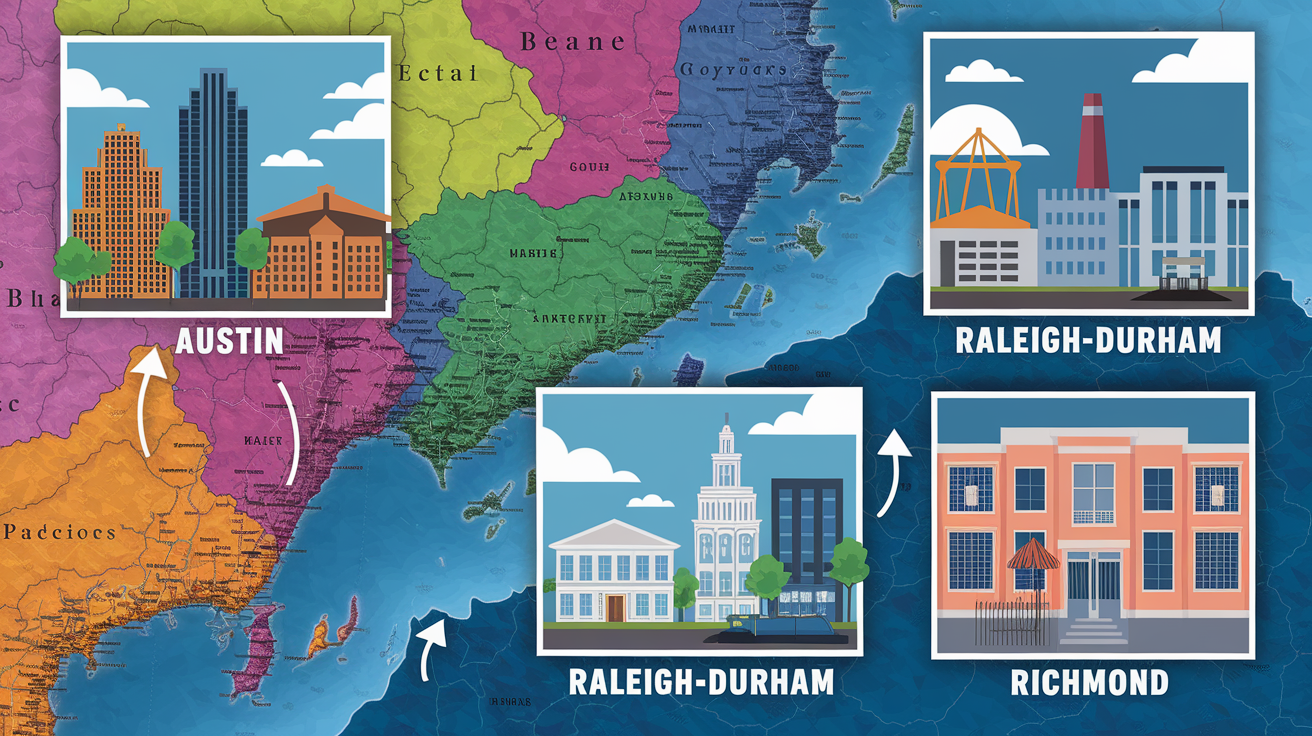
Real-world examples show how tightly employment shifts and rent patterns align. Each metro’s job market trend produces distinct rental outcomes, shaped by industry mix, migration flows, and housing supply responsiveness.
| City | Job Market Trend | Rent Outcome |
|---|---|---|
| Austin, TX | Tech boom: rapid software and startup hiring, 2020–2022 | Rent growth exceeded 20% annually; permits rose 40% above historical average |
| Detroit, MI | Manufacturing decline: large-scale auto layoffs, 2008–2012 | Multi-year rent stagnation; vacancy climbed above 10% |
| Raleigh-Durham, NC | Biotech and healthcare expansion, 2015–2023 | Steady mid-tier rent growth; demand concentrated near Research Triangle employers |
| Richmond, VA | Net job inflows +7,191 in Q3 2023; government and healthcare anchors | Home prices +13% YoY; rents rose steadily with low volatility |
These cases illustrate a consistent pattern. Metros with diversified, expanding employment bases sustain rent growth even during national downturns. Single-industry metros face sharper rent cycles tied to sector-specific shocks. Austin’s rapid tech hiring outpaced housing construction, compressing vacancy and accelerating rents. Detroit’s manufacturing losses triggered out-migration, leaving excess housing stock and depressed rents. Raleigh-Durham’s biotech corridor attracted mid-income professionals who filled mid-tier rentals, producing stable, moderate rent gains. Richmond’s mix of government, healthcare, and education jobs insulated the market from volatility, supporting consistent rent and price appreciation.
Forward‑Looking Indicators for Predicting Rent Changes

Leading indicators include job postings volume, new business registrations, wage acceleration, and major employer announcements. These often precede rent changes by several quarters. Monitoring these metrics gives renters, investors, and planners early warning of demand shifts before they appear in rent or vacancy data.
Five key indicators to track:
Job postings volume. A 10 percent or 15 percent spike in online job ads signals hiring acceleration and future in-migration, typically showing up in rents within two to three quarters.
Major employer announcements. New corporate campuses, distribution centers, or factory openings produce concentrated rental demand near the site. Monitor construction timelines to anticipate move-in waves.
Wage growth trends. Year-over-year median wage gains above 3 percent support sustained rent increases. Stagnant or negative wage growth caps rent growth regardless of job counts.
Multifamily permit issuance vs. historical average. Permit surges indicate future supply that can moderate rent growth if job gains slow. Look at Greenville, SC’s 70 percent increase or Austin’s 40 percent rise.
Office absorption rates. Positive net absorption signals employer expansion. Negative absorption warns of downsizing or remote-work shifts that reduce local employment and rental demand.
Apply these by comparing current readings to 12-month averages and historical norms. A metro showing rising job postings, wage acceleration, positive office absorption, and moderate permit activity is likely to see rent growth strengthen. Falling postings, flat wages, and high permit counts signal cooling demand and softer rents ahead.
Actionable Insights for Renters, Investors, and Local Planners

Renters benefit from tracking hiring surges to anticipate rising rents. If a major employer announces expansion or local job postings jump, expect lease-renewal offers to include larger rent increases within six to nine months. Renters in those metros should lock in longer leases before rents accelerate or begin searching in neighborhoods farther from job clusters where competition is lighter.
Four actionable strategies by stakeholder:
Renters. Monitor local unemployment rates and job announcements. Rising job counts signal tighter rental markets and higher rents ahead. Consider lease timing and neighborhood choice to avoid peak-demand zones.
Investors. Target metros with sustained inbound-share above 50 percent, accelerating job growth, and permit activity lagging demand. Avoid markets with heavy recent multifamily deliveries unless job gains justify absorption.
Homebuyers. Factor local employment trajectory and wage trends into mortgage-vs.-rent tradeoffs. Metros with strong job growth often see home prices and rents rise together, compressing affordability windows.
Local planners. Use job growth forecasts and industry expansion announcements to anticipate housing needs. Coordinate zoning and permitting to match expected demand, reducing rent volatility and displacement risk.
Investors use job expansion forecasts to identify emerging rental hotspots before rents fully reflect demand shifts. Buying or developing properties in metros with rising job postings, positive office absorption, and limited new supply positions portfolios for above-average rent growth. Planners rely on labor data to calibrate housing policy. When job growth outpaces permits, affordability deteriorates rapidly, making proactive zoning and density adjustments critical to maintaining balanced rental markets.
Expert Analysis on Labor‑Driven Housing Dynamics

Economists emphasize that local employment volatility drives short-term rent behavior more than national trends. A metro experiencing a 2 percent job gain while the nation averages 1 percent will see rents rise faster than the national median, regardless of Federal Reserve policy or national wage trends. Housing supply responsiveness magnifies or reduces labor-market effects. Metros with flexible zoning and quick permitting processes absorb job-driven demand with new construction, moderating rent spikes. Restrictive markets channel all new demand into existing stock, accelerating rent growth.
The relationship between employment variables and rental prices tightens when supply lags demand. During 2021 through mid-2023, remote-work relocations temporarily decoupled jobs from rents in some sunbelt metros. Workers moved for lifestyle or lower costs rather than new local jobs, producing rent surges despite modest local job growth. Return-to-office mandates and slowing remote migration have since restored the traditional job-to-rent linkage. Analysts now recommend combining local job metrics with in-migration data, office absorption trends, and permit activity to build comprehensive rent forecasts that account for both employment-driven and migration-driven demand shifts.
Final Words
Strong local job gains tend to lift rents, while layoffs and rising unemployment usually cool them—often with a 3–6 month lag.
This post covered the core links: employment shifts, wage trends, industry moves, unemployment timing, city case studies, leading indicators, and practical steps for renters, investors, and planners.
If you want to track how job market trends influence local rent forecasts, watch job postings, wage growth, and major employer moves—they often show the direction before rents change. With those signals, you can plan ahead and make smarter housing choices.
FAQ
Q: How do job market changes affect local rents?
A: Job market changes affect local rents by shifting local demand: hiring growth raises renter competition and pushes rents up, while layoffs increase vacancies and put downward pressure on prices within months.
Q: Can job growth and rising wages predict rent increases?
A: Job growth and rising wages predict rent increases because faster hiring and higher incomes boost housing competition, especially near expanding sectors, signaling greater upward rent pressure over coming quarters.
Q: Which industries have the biggest impact on local rent levels?
A: Industry expansions in tech, healthcare, logistics, and large manufacturing impact local rent levels most, drawing workers and lifting nearby demand; contractions in those sectors can lower rents within 6 to 12 months.
Q: How quickly do unemployment changes affect rental markets?
A: Unemployment changes affect rental markets with a lag: rents typically react in about 3 to 6 months as vacancies rise after layoffs, and they recover similarly when hiring restarts.
Q: What leading labor indicators should I watch to forecast rent shifts?
A: Leading labor indicators to watch are job postings, new business registrations, wage acceleration, major employer announcements, and local hiring rates; these often precede rent moves by several quarters.
Q: How should renters, investors, and planners use employment data?
A: Renters, investors, and planners should use employment data to time moves, target markets, and plan supply: renters watch hiring surges, investors seek job-growth hotspots, and planners forecast housing needs.
Q: Are local job trends more important than national data for rent forecasts?
A: Local job trends are more important than national data for rent forecasts because rental markets react to nearby hiring and sector shifts, and local supply constraints determine how big price moves will be.
Q: How do wage stagnation and income-to-rent ratios limit rent growth?
A: Wage stagnation and weak income-to-rent ratios limit rent growth by reducing renters’ ability to pay, capping landlords’ pricing power and slowing rent increases even when employment rises.
Q: Can you give local examples where employment shifts changed rents?
A: Local examples where employment shifts changed rents include Austin’s tech boom lifting rents above 20% in 2020 to 2022, Detroit’s manufacturing losses causing multi-year stagnation, and Raleigh’s biotech growth raising mid-tier rents.