


Think a home just sitting on the market is harmless? It isn’t.
Every extra month a listing lingers chips away at seller pricing power, roughly 2–2.5% off per 30 days early on, then rising to about 3.5% per 30 days after six months.
This piece explains why longer days on market change buyer perception, how to diagnose if price or presentation is the problem, and when small early cuts plus a marketing refresh protect your net proceeds.
Here’s what sellers should do next.
How Extended Days on Market Directly Influence Seller Pricing Decisions

When a home sits on the market for weeks or months without selling, the seller’s pricing power doesn’t just weaken. It collapses in ways you can track and predict. Transaction data across thousands of sales shows a clear pattern: for every 30 days a listing stays active during the first six months, average price discounts grow by about 2.0–2.5%. After six months, things get worse. Sellers face pressure to drop prices roughly 3.5% per 30-day stretch, and if you’re approaching or past a year on market, that rate climbs toward 5% monthly. This isn’t some loose correlation. Prolonged days on market signal to buyers that something’s off—maybe the price is too high, maybe there’s a hidden problem, maybe the property just isn’t competitive. All of that translates into lower final sale prices.
Buyer psychology changes as the days pile up. In the first 30 days, your listing gets peak attention. Fresh inventory always does. But cross 60 or 90 days without an accepted offer and buyers start assuming there’s room to negotiate. They figure you’re motivated, or maybe desperate. Most major listing platforms let buyers filter by “newest” or exclude properties over a certain DOM threshold, which means stale listings lose visibility even when people are actively searching. Someone looking at a 120-day listing is going to wonder what’s wrong with it that everyone else passed on. That suspicion alone reduces the number and quality of offers, and forces sellers to either explain the delay with hard documentation or accept that price needs to come down to get things moving again.
The discount trajectory tied to specific DOM windows looks like this:
30 days: Sellers worry about stigma at this point, but a listing here isn’t automatically in trouble. If showings are light and no offers have come in though, expect buyers to assume a 1–2% reduction might be coming soon.
60 days: Discounts historically average around 4.75% by now. Buyers actively expect some flexibility in negotiations, and sellers who haven’t adjusted price see slower inquiry rates.
90 days: This is when broader caution kicks in. Properties at 90+ days with zero price cuts get flagged by agents as candidates for low initial offers, often 5–7% below list.
120 days: Average observed discount climbs to roughly 8.5%. Sellers at this stage have usually lost most of their leverage and need to think hard about whether a bigger repositioning cut or a strategic pause makes sense.
180 days (six months): Discount pressure accelerates past the early-market rate. Cumulative reductions often exceed 10%, and buyer perception hardens around “distressed” or “problem property” narratives unless you can provide clear context.
365 days (one year): Listings that stay active for a full year face cumulative discounts often hitting 15% or more from original list, because sustained market rejection signals fundamental pricing or condition misalignment.
Diagnosing Why a Home Isn’t Selling Before Cutting Price

Before you reflexively cut price at the first sign of extended DOM, stop and diagnose what’s actually going on. Is it pricing, presentation, or timing? Start by comparing your property to recent sales in your building or neighborhood that closed in the past 60 days. If multiple units in the same building have dropped price repeatedly or sold for 8–12% below their original ask, the issue is probably building-specific overpricing driven by outdated appraisals or sellers anchoring on older peak values. But if recent comps closed near list and moved quickly while your DOM keeps climbing, the problem might be condition, staging, or access issues rather than price. Pay close attention to the “last list price before contract” metric, not just the original list date. Many listings show extended DOM because a prior contract fell through after weeks in escrow, which inflates the counter even though the property wasn’t actively marketed during that window.
Contextual DOM distortions happen all the time and get overlooked constantly. A listing that racked up 120+ days might have spent half that time genuinely off-market due to failed buyer financing, building scaffolding blocking views, or tenant-access restrictions that limited showings to narrow weekday windows. If your listing launched during a major holiday period, an election week, or a local event that diverted buyer attention, the effective exposure window may be way shorter than the raw DOM number suggests. Same goes for listings where building management imposed temporary showing bans (evenings, weekends) or where photos were poor quality and only recently updated. The DOM counter doesn’t reflect true competitive exposure in those cases. It reflects invisible downtime.
- Pull a current comparative market analysis showing the last 90 days of closed sales in your building or immediate neighborhood, adjusting for square footage, condition, and view or floor differences.
- Review your listing’s price per square foot against those comps. If you’re 8–12% above the median, pricing is your primary issue.
- Audit your marketing assets: Are photos professional and recent? Is staging current? Are virtual tours, floor plans, and detailed descriptions present? If not, weak presentation might be suppressing interest even at a fair price.
- Check DOM context: Was there a contract failure? Were showings restricted by tenant occupancy, building rules, or access logistics? If yes, document the interrupted period and think about whether a legitimate off-market reset (if allowed) or fresh marketing push makes more sense than cutting price.
- Evaluate external timing: Did you list during a low-activity window like a major holiday or local disruption? If your effective exposure has been limited, a staging or marketing refresh might outperform an immediate price cut.
Determining the Right Timing and Size of Price Reductions as DOM Increases
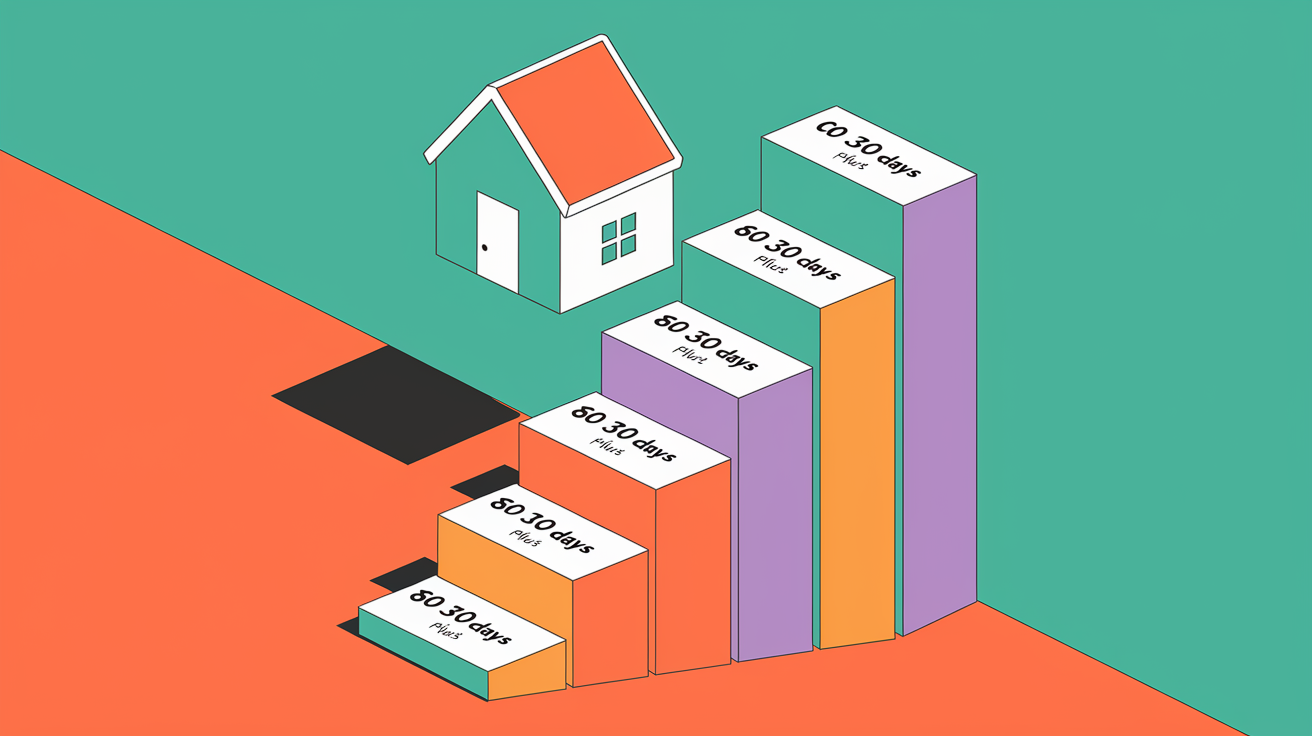
Sellers who act early with small, targeted price adjustments preserve way more leverage and net proceeds than those who wait months before making a single large cut. During the first 30 days, watch showing traffic and offer activity closely. If you’re getting minimal showings or feedback indicates “overpriced,” a corrective reduction in the 2–3% range can reset buyer perception and recapture attention before stigma sets in. This incremental approach signals responsiveness without desperation. In the 30–60 day window, if activity stays weak, consider an additional 2–4% adjustment paired with a marketing refresh (new photos, open house, targeted ads). This combination often re-engages buyers who filtered out the listing earlier and prevents the property from sliding into the higher-discount 60–90 day band where average reductions approach 4.75% and buyer skepticism hardens.
Small, early cuts preserve leverage because they show market responsiveness and keep the listing competitive within its price tier. A seller who drops from $450,000 to $438,000 (roughly 2.7%) at day 25 captures renewed buyer attention and maintains negotiating room, whereas a seller who waits until day 90 and then cuts to $432,000 (4%) faces a market that’s already mentally categorized the property as stale and expects further concessions. The psychological difference is real. Early movers signal confidence and adjustment. Late movers signal distress. By the time a listing crosses 100 days with no reduction, buyers and their agents assume the seller is either unmotivated or unrealistic, which invites low initial offers (often 5–8% below the stale list price) and reduces the likelihood of competitive bidding.
After six months, the discount landscape shifts sharply. Properties that remain unsold past 180 days face accelerated pressure, with data showing required reductions climbing to 3.5–5% per 30-day equivalent. At this stage, sellers need to evaluate whether incremental cuts will suffice or whether a larger strategic repositioning (maybe 8–12% below the current list) is necessary to generate urgency and reset market perception. Or, if the property has legitimate value and the extended DOM stems from documented issues like failed contracts, temporary inaccessibility, or a major market slowdown, a combination of a meaningful price cut and a formal relist (after a 90-day off-market pause, if rules allow) can effectively restart the clock and buyer psychology.
| DOM Range | Recommended Reduction % | Expected Buyer Perception | Risk if No Adjustment |
|---|---|---|---|
| 0–30 days | 1–3% if activity is weak | Early responsiveness; property may have been slightly mispriced but seller is engaged | Listing enters 30–60 day band where discount expectations rise to 4–5% and showing traffic declines |
| 30–60 days | Additional 2–4% (cumulative ~5–6%) | Seller is motivated; buyers expect some negotiation room but property isn’t yet “stale” | Crosses into 90+ day territory where stigma hardens and average discounts approach 8–10% |
| 60–120 days | 3–5% per 30-day interval or larger strategic cut (8–10% cumulative) | Property flagged as aged inventory; buyers assume hidden issues or seller desperation | Listing becomes invisible to fresh buyer pools; cumulative discounts exceed 10% and negotiation leverage collapses |
| 180+ days (6 months+) | 5% per 30-day equivalent or major repricing/relist (10–15% cumulative) | Market rejection confirmed; only value-focused or investor buyers remain interested | Listing may sit indefinitely; seller faces choice between deep discount, major improvements, or extended hold |
How Buyer Reactions Shift as Listings Age on the Market

As DOM climbs past 90 days, buyer psychology moves from curiosity to suspicion. The initial question shifts from “Is this a good fit?” to “Why hasn’t anyone else bought it?” Even if the answer is benign (maybe the seller rejected early offers hoping for a higher bid, or the property was briefly off-market due to repairs), the absence of a clear, documented explanation triggers caution. Buyers start assuming undisclosed condition issues, difficult sellers, or building-level problems like poor financials, litigation, or upcoming assessments. This perception reduces the pool of interested parties and lowers the average offer price, because risk-averse buyers either walk away or submit discounted bids that price in their uncertainty. Search behavior reinforces this. Platforms allow buyers to filter by “days on market,” and many agents coach clients to focus on listings under 60 days to avoid potential headaches. Aged inventory loses visibility even when priced competitively.
Context can neutralize stigma if sellers provide clear, credible documentation. A listing that spent 60 of its 120 DOM in a failed contract (buyer financing fell through after inspection) or off-market due to building scaffolding can reset buyer perception by sharing that timeline transparently in showing remarks or agent communications. “Property was under contract for 8 weeks; buyer financing issue. Relaunched with updated staging and photos.” Similarly, homes that undergo significant improvements during an extended listing period (new kitchen, roof replacement, HVAC upgrade) can justify the DOM by demonstrating tangible value additions that weren’t present when earlier buyers passed. When sellers document legitimate delays and improvements, they reclaim negotiating power and can defend a higher price despite the DOM counter, because the narrative changes from “rejected by the market” to “temporarily paused for valid reasons and now improved.”
Using Competitive Market Analysis to Reset Pricing Strategy

A rigorous competitive market analysis anchors any realistic pricing reset by comparing your property to recent closed sales, not just current active listings or wishful thinking. Start by isolating comps within the same building (for condos) or within a tight radius and price band (for single-family homes), then adjust for square footage, condition, view, floor level, and recent upgrades. The critical metric is price per square foot for truly comparable units. If your listing is priced 8–12% above the median per square foot of recent closes and those closes required 30–45 days to sell, your extended DOM is almost certainly a pricing issue, not a presentation or market-timing problem. If comps are selling near or above your price within 20–40 days though, the issue might be staging, photos, or accessibility rather than the number itself.
Accurate last-list-price data is essential for honest repositioning. Many sellers (and some agents) anchor on the original list price when evaluating whether a reduction is “enough,” but buyers and their agents track the last list price before contract, which reflects the true negotiated starting point. If a comp originally listed at $500,000, dropped to $475,000, and closed at $465,000, the relevant discount isn’t 7% from original list. It’s 2.1% from the last list. When recalibrating your own price, use this last-list metric to understand what level of reduction actually moves properties in your segment, because buyers evaluate your current ask against the most recent pricing of sold comps, not their initial optimistic launches. Building-level analysis is particularly revealing. If three other units in your condo building have each made multiple price drops and still took 90+ days to close, the entire building might be perceived as overpriced or burdened by financial or aesthetic issues, and your pricing strategy needs to account for that broader stigma.
- Median per square foot of comps closed in the past 60 days: Calculate this for units truly similar in size, condition, and floor or view. If your list price exceeds this median by more than 5–7%, a reduction to align with or slightly undercut the median is often necessary.
- Average DOM for successful sales in your segment: If comps are closing in 35–50 days and you’re at 90, either your price or presentation is misaligned. Use the average as a benchmark and aim to reposition into that window.
- Number and size of price cuts competitors made: Track how many times other units reduced price and by how much. If the pattern shows 2–3 reductions totaling 8–10%, plan for similar flexibility rather than expecting a single small cut to work.
- Last list price before contract vs original list: Identify the effective negotiated price tier by reviewing the final listed number, not the launch price, to understand real buyer acceptance levels.
- Building-level discount trends: If multiple units show repeated cuts and extended DOM, factor in a building discount (often 3–5% below isolated comps) to overcome collective stigma and attract buyers who’ve been avoiding the building.
Staging, Marketing, and Accessibility Fixes That Can Reduce DOM Without Cutting Price

Professional photography and staging deliver measurable ROI by increasing online engagement and in-person showing requests, often shortening DOM by 15–30 days even when list price stays the same. Buyers form first impressions within seconds of viewing online listing photos. Poor lighting, cluttered rooms, or dated décor trigger immediate dismissal, while bright, staged interiors with clear sightlines and aspirational furnishings generate saved searches and showing appointments. A $1,500–$3,000 investment in professional photos, virtual staging, and a decluttered presentation can shift a listing from “scroll past” to “schedule a tour,” which increases competitive tension and preserves pricing power. The difference between a well-staged listing selling in 40 days at full ask and an unstaged version taking 90 days and accepting a 5% discount often exceeds $20,000 on a mid-tier home. That’s way more than the staging cost.
Small, targeted upgrades like fresh paint in neutral tones, modern light fixtures, or new stainless appliances refresh a property’s perceived condition without requiring major renovation. These fixes address the “move-in ready” threshold that buyers prioritize. Even minor cosmetic neglect (scuffed walls, builder-grade fixtures, older appliances) can push buyers to discount their offers or skip the property entirely in favor of turnkey alternatives. When a listing has been on the market 60+ days due to condition perception rather than price, a $3,000–$5,000 refresh (paint, hardware, appliances) paired with new photos often generates renewed interest and justifies holding the price rather than cutting 3–5%, which would cost $12,000–$20,000 on a $400,000 home.
Showability barriers like restricted showing hours, difficult access, or tenant occupancy artificially inflate DOM and need to be resolved to give the property a fair market test. A listing that allows showings only on weekday afternoons excludes most working buyers and will accumulate DOM without genuine exposure. Properties with tenants who resist showings or require 48-hour notice create friction that deters agents from booking tours, which suppresses offer activity even when pricing and condition are competitive. One documented case saw a listing reach 120 days primarily because building management banned weekend and evening showings during a lobby renovation. Once access normalized and the seller relaunched with updated photos, the property sold within 28 days at the original price. If your DOM is climbing but showing count is low and feedback cites access difficulty, prioritize resolving the logistical barrier (negotiate flexible tenant terms, adjust showing windows to evenings and weekends, or offer incentives for cooperative access) before assuming price is the issue.
When Relisting, Resetting DOM, or Taking a Strategic Pause Makes Sense

Most multiple listing services allow a days-on-market reset if a property is withdrawn from the market for a consecutive 90-day period, and some permit resets after a brief off-market interval if the property undergoes significant changes (major renovation, price repositioning). This administrative tool can be valuable when used ethically for legitimate operational reasons: temporary construction that blocks access, significant upgrades that change the property’s condition tier, or a strategic decision to wait for a seasonal demand window. DOM resets should never be used purely to manipulate perception though. Buyers and agents increasingly track price history and listing activity across platforms, and a reset without documented improvements or a credible off-market reason can backfire by signaling dishonesty and eroding trust. Transparency matters. If you take a listing off-market for 90 days to complete a kitchen remodel and then relist with fresh photos and a reset DOM counter, that narrative is defensible and enhances value. If you pull a listing for 91 days solely to reset the counter and relist at the same price with no changes, savvy buyers will notice and discount accordingly.
Strategic pauses improve pricing outcomes when the market is temporarily soft or when the property requires meaningful improvements that buyers will value. If inventory is spiking in late fall and demand is seasonal, pulling a listing in November and relaunching in February with spring buyer activity can yield a better price than grinding through winter with mounting DOM and incremental cuts. Similarly, if feedback consistently flags outdated finishes or deferred maintenance, pausing to address those issues (new flooring, updated bathrooms, exterior paint) positions the property as fresh inventory in better condition, which supports a higher ask and faster sale. The key is ensuring the pause serves a real strategic or operational purpose, because unjustified resets damage credibility and may violate MLS rules or state disclosure requirements.
| Strategy | When to Use | Risk Level | Expected Impact |
|---|---|---|---|
| 90-day off-market pause + relist | After major improvements (renovation, repair) or to shift to stronger seasonal demand window | Low if improvements are documented; medium if purely strategic timing | Resets DOM and buyer perception; property relaunches as “new” inventory with enhanced appeal |
| Short-term withdrawal for staging/photo refresh | When feedback cites poor presentation but pricing is competitive with comps | Low; minimal off-market time preserves momentum | Increases showing traffic and perceived value without DOM reset; often shortens time-to-sale by 20–30 days |
| Pocket listing or off-MLS marketing during slow season | High-end or unique properties in low-inventory niches; avoid public DOM accumulation | Medium; reduces broad exposure but targets motivated buyers | Preserves pricing power by avoiding public stigma; effective if agent network is strong |
| Immediate relist with price cut (no pause) | When diagnosis confirms overpricing and market is active; delay risks further DOM accumulation | Low; transparent and responsive | Signals motivation and resets buyer attention; often generates offers within 10–20 days if reduction is adequate |
Case-Based Pricing Scenarios Showing the Cost of Waiting Too Long

Using a baseline sale price of $429,000 (the average from a six-month market sample), the financial impact of extended DOM becomes starkly visible. A home that sells within the first 30 days typically closes at roughly 99% of list price, translating to a $4,290 discount and a final sale around $424,710. If that same property takes 60 days, the average discount climbs to 4.75%, or about $20,378, yielding a sale price near $408,622. At 120 days, the average discount hits 8.5% (a $36,565 reduction) and the property closes around $392,435. The difference in seller net proceeds between a fast sale (30 days) and a protracted one (120 days) is approximately $32,275, which far exceeds the cost of early staging, professional marketing, or a modest 2–3% price adjustment made proactively in the first month.
Incremental early cuts preserve seller proceeds by maintaining leverage and competitive positioning. Consider a seller who lists at $450,000 and, after 25 days of weak traffic, reduces to $438,000 (2.7% cut). This adjustment re-engages buyers, generates showings, and the home goes under contract at day 40 for $432,000 (4% total discount from original list). Compare that to a seller who holds firm at $450,000 for 90 days, then cuts to $430,000 (4.4%), and finally accepts an offer at day 115 for $415,000 (7.8% total discount). The early mover nets roughly $17,000 more, avoids months of carrying costs (mortgage, taxes, utilities), and preserves psychological and financial capital. The late mover’s stubbornness costs real money and time.
A hypothetical “seller proceeds model” comparing early versus late reduction illustrates the cascade effect. Assume a $500,000 list price, 6% total transaction costs (agent commissions, closing fees), and monthly carrying costs of $3,000 (mortgage, taxes, insurance, utilities). Scenario A (early action): Seller cuts to $485,000 at day 20, sells at day 45 for $478,000. Gross proceeds = $478,000; transaction costs = $28,680; carrying = $4,500 (1.5 months); net ≈ $444,820. Scenario B (delayed action): Seller holds at $500,000 for 90 days, cuts to $475,000, sells at day 135 for $460,000. Gross proceeds = $460,000; transaction costs = $27,600; carrying = $13,500 (4.5 months); net ≈ $418,900. The delta is roughly $25,920 in favor of the early mover, driven by both higher sale price and lower carrying costs. Scenario B’s seller waited, hoping for a higher offer, and paid dearly for the delay.
- 0–30 day sale (1% discount): List $429,000, sell $424,710; net impact = $4,290 reduction from list; minimal carrying cost; strong leverage retained.
- 30–60 day sale (4.75% discount): List $429,000, sell $408,622; net impact = $20,378 reduction from list; moderate carrying cost; some leverage lost but deal still competitive.
- ~120 day sale (8.5% discount): List $429,000, sell $392,435; net impact = $36,565 reduction from list; significant carrying cost; leverage collapsed, buyer perception negative.
- 180+ day sale (10–15% discount range): List $429,000, eventual sale $365,000–$386,000; net impact = $43,000 to $64,000 reduction from list; extended carrying cost; seller often forced to accept below-market offer due to financial or psychological fatigue.
Final Words
In the action, extended days on market weaken seller leverage and push buyers to expect discounts. We showed how DOM drives discount momentum, how buyer psychology turns suspicious, and which fixes (staging, access, comps, or modest early cuts) help first.
Use a quick diagnostic before cutting price, favor small early adjustments tied to DOM milestones, and consider relisting or a brief pause when there’s a clear reason. Understanding what longer days on market mean for seller pricing strategies helps sellers protect proceeds and sell sooner on better terms.
FAQ
Q: Is 200 days a long time for a house to be on the market?
A: Two hundred days is a long time for a house to be on the market. It usually signals lost seller leverage, growing buyer discount expectations, and often means noticeably lower net proceeds than an early sale.
Q: How many days on market before dropping price? Does days on market matter?
A: Days on market do matter; check pricing around 30 to 60 days and consider modest 2 to 3% cuts per 30 days during the first six months. After about 100 days without offers, expect larger reductions and weaker negotiating power.
Q: What is the 3-3-3 rule in real estate?
A: The 3-3-3 rule in real estate is an informal guideline to review a listing at 3 days, 3 weeks, and 3 months, spotting early interest, fixing marketing or access issues, and deciding measured price moves.